Climate Change
Climate change and the need to transition to low-carbon development are among the key challenges of our time. Global warming, driven by anthropogenic greenhouse gas emissions, is recognized as a fact by the scientific community. According to the Sixth Assessment Report of the Intergovernmental Panel on Climate Change (IPCC, 2023), the decade from 2011 to 2020 was the warmest in the last 125,000 years. Climate change is already having significant impacts on water resources, food security, public health, and economic activity.
According to the World Meteorological Organization (WMO), there is a 98 % probability that the 2023–2027 period will be the hottest on record. These trends increase the vulnerability of ecosystems and require urgent and large-scale measures for adaptation and emissions reduction.
Alongside risks, the green transition opens up substantial economic, investment, and social opportunities, supporting the development of a more sustainable and inclusive growth model. KEGOC JSC recognizes the critical role of the energy sector in achieving global carbon neutrality goals set forth in the Paris Agreement and contributes to this process through its investment and operational activities.
Understanding climate-related risks and opportunities is increasingly important for stakeholders, including investors, regulators, and partners. In response, in 2024 KEGOC JSC developed and approved its Climate Programme for 2025–2060. The Climate Programme includes a comprehensive qualitative and quantitative assessment of climate risks and opportunities, incorporating scenario modelling, vulnerability analysis, and evaluation of financial impacts on the Company’s operations.
Climate Change Management
Board of Directors’ Oversight of the Climate Agenda
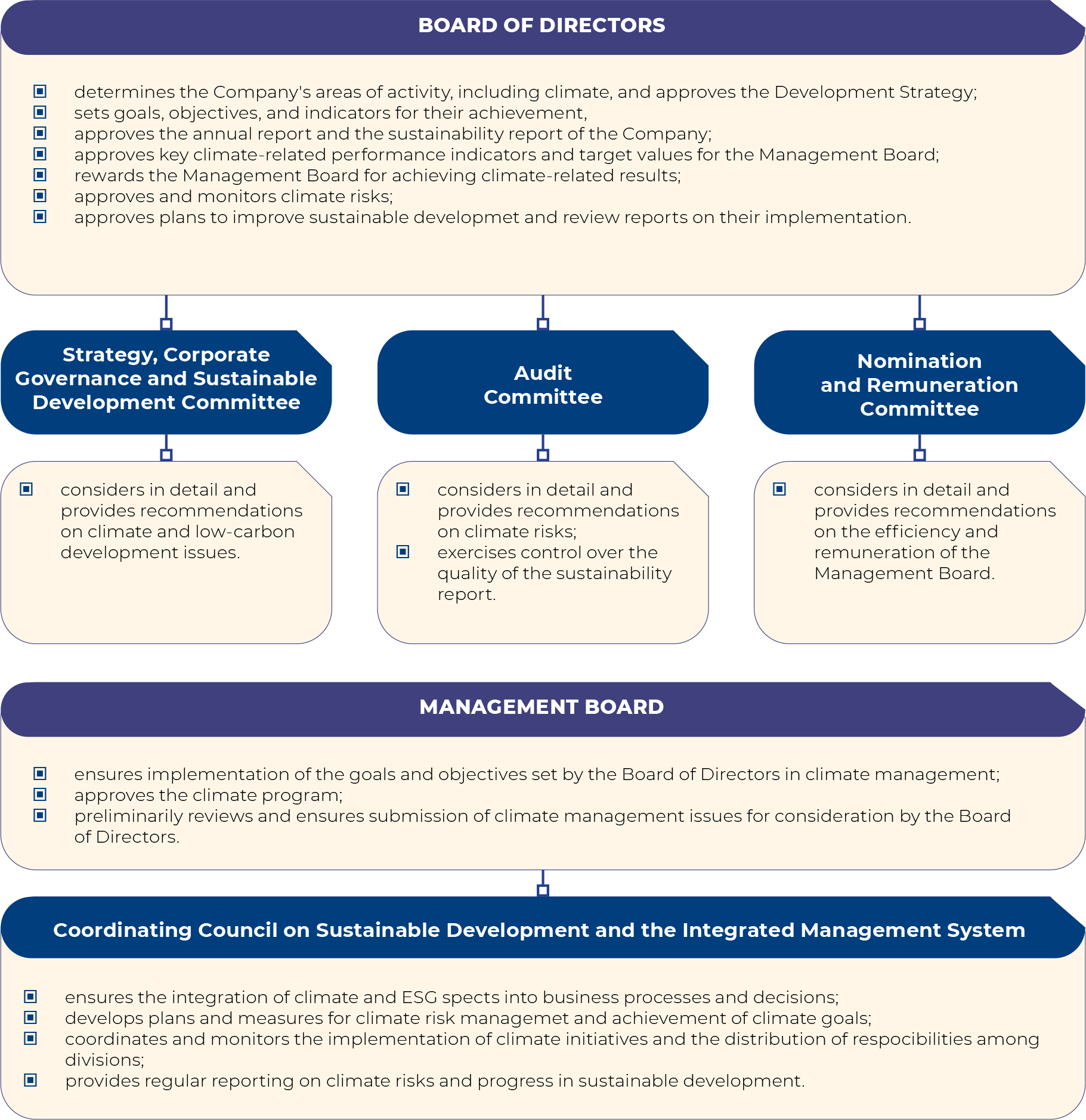
Climate change issues occupy a central place in KEGOC JSC’s strategic management and are integrated at all levels of corporate governance, starting from the Board of Directors and its committees. In 2024, the climate agenda was addressed through regular Board meetings and strategic sessions, including the annual approval of climate-related KPIs, quarterly monitoring of the ESG Plan, and oversight of climate risk management.
The Board of Directors defines the Company’s strategic priorities, including climate goals, approves the Annual Report containing the Sustainability Report, and sets target indicators for which the Management Board is accountable. An important function of the Board is the annual evaluation of Management performance, including based on functional KPIs.
The work on climate matters is supported by specialized Board Committees:
- The Strategy, corporate and sustainable development Committee provides recommendations on climate matters;
- The Audit Committee assesses the quality of climate-related disclosures and risk management;
- The Nomination and Remuneration Committee considers the achievement of KPIs when evaluating the effectiveness of the Management Board.
The Board of Directors also ensures the availability of ESG and climate-related competencies. As part of improving the corporate governance system and raising awareness of climate-related risks and opportunities, members of the Board of Directors of KEGOC JSC participate in training events and expert discussions dedicated to sustainable development and climate change.
During the reporting year, Board members attended training sessions involving internal and external experts, covering topics of the climate agenda, including the impact of climate change on the activities of energy sector companies, international trends and regulatory requirements in the field of sustainable development, and the role of innovative technologies and digital solutions in ensuring a sustainable future.
The knowledge and best practices gained are used when considering strategic development matters of the Company, managing climate risks, and developing long-term initiatives in sustainable development.
Role of the Management Board in Climate Governance
The Management Board of KEGOC JSC implements the strategic goals defined by the Board of Directors, including climate change objectives, approves the Climate Programme, and is responsible for its implementation, climate risk management, and coordination of actions across all divisions within the unified ESG-agenda.
The Coordinating Council on Sustainable Development and the IMS, operating under the Management Board, ensures:
- integration of climate aspects into business processes and operational decisions;
- development of internal programmes and plans aimed at reducing climate risks;
- assessment of climate challenges and opportunities;
- allocation of responsibilities and monitoring of implementation.
In 2026, with a view to improving the management of sustainable development issues and integrating climate aspects, an ESG Committee is planned to be established under the Coordinating Council, to comprise experts in key areas.
Climate risk management processes are based on the principles of double materiality, taking into account stakeholder expectations. Significant risks and opportunities are identified in the course of dialogue with investors and partners, taking into account TCFD recommendations.
The Company acknowledges the need to adapt to evolving regulatory environments and reporting requirements and regularly updates its climate management approaches in response to new expectations and challenges.
KEGOC JSC climate change governance structure
Climate Change Strategy
KEGOC JSC consistently integrates the climate agenda into its strategic and operational management, recognizing the importance of sustainable development in the context of the energy transition. The Company’s climate actions are based on internal documents such as the Climate Programme, as well as the Low-Carbon Development Programme of KEGOC JSC until 2031 and the vision for achieving carbon neutrality by 2060. These documents cover decarbonization, energy saving and climate risk management objectives.
In particular, the Company’s sustainable development and carbon footprint reduction objectives are set out in the Low-Carbon Development Programme, which was developed taking into account the Strategy for Achieving Carbon Neutrality of the Republic of Kazakhstan and the Low-Carbon Development Concept of Samruk-Kazyna JSC. The Low-Carbon Development Programme covers measures on energy saving, energy efficiency improvement and the phased reduction of direct and indirect emissions. The purpose of the Programme is to formalize approaches and instruments that support the reduction of the carbon footprint through:
- assessment of decarbonization potential, taking into account the Company’s operational specifics;
- identification of priority areas and measures for reducing emissions;
- forecasting of CO₂ emissions through 2060;
- improvement of employees’ climate literacy and dissemination of global emission reduction practices.
The key objectives include reducing the consumption of fuel and energy resources, improving systems for metering and monitoring energy costs, and introducing resource-saving technologies.
KEGOC JSC does not transport or distribute gas, generate electricity, operate power plants or own a generation portfolio. Accordingly, indicators related to gas leakage rates, the structure of own generation, installed capacity by fuel type, electricity generation efficiency and power plant availability are not applicable to the Company. Backup power supply sources are used only to maintain critical infrastructure in emergency situations and are not considered generation assets.
The Company takes into account the specific nature of its role as the System Operator and electric grid operator, which limits its ability to directly implement renewable energy projects. However, KEGOC JSC actively participates in R&D and considers the implementation of pilot solutions, such as energy storage systems. In 2025, the Company continued implementation of the pilot project “Introduction of Energy Storage Systems in the Unified Power System of the Republic of Kazakhstan” together with China Power International Development Limited, China Power International Holding Limited and the Association of Renewable Energy of Kazakhstan. The purpose of the project is to study the impact of energy storage systems on the regulation of the Unified Power System during the integration of renewable energy sources.
Given KEGOC JSC’s role as the System Operator and operator of the National Power Grid, the Company’s main contribution to the decarbonization of the economy of the Republic of Kazakhstan is associated not only with reducing its own emissions, but also with providing the infrastructure conditions required for the integration of renewable energy sources, increasing the flexibility of the power system and developing low-carbon energy. These approaches are also reflected in the Company’s strategic objectives, including the advanced development of the National Power Grid of the Republic of Kazakhstan, effective integration of renewable energy sources and implementation of the Smart Grid.
The transition to low-carbon development includes the following measures:
- phased replacement of vehicles with internal combustion engines with electric vehicles, Scope 1;
- increase in the share of purchased “green” electricity, Scope 2;
- development of digital solutions, including Smart Grid, energy audits, equipment modernization and promotion of resource saving, Scope 1 and Scope 2;
- implementation of current green projects, Scope 2: Integration of the Power System of Western Kazakhstan with the Unified Power System of Kazakhstan. Construction of Electric Grid Facilities; Strengthening of the Electric Grid of the Southern Zone of the Unified Power System of the Republic of Kazakhstan;
- implementation of prospective green projects, Scope 2: Strengthening of the External Power Supply Scheme of Astana. Construction of Electric Grid Facilities; Increasing the Transit Potential and Transmission Capacity of the Unified Power System of Kazakhstan; Construction of the 500 kV OHTL Karaganda SS – Zhezkazgan SS – Kyzylorda SS – Shymkent SS; Strengthening of the Western Energy Hub. Construction of the 500 kV OHTL Karabatan SS – Beineu SS -Mangystau SS; Integration of the Western Zone with the Unified Power System of the Republic of Kazakhstan, Phase II.

Key decarbonization levers by emission sources at KEGOC JSC
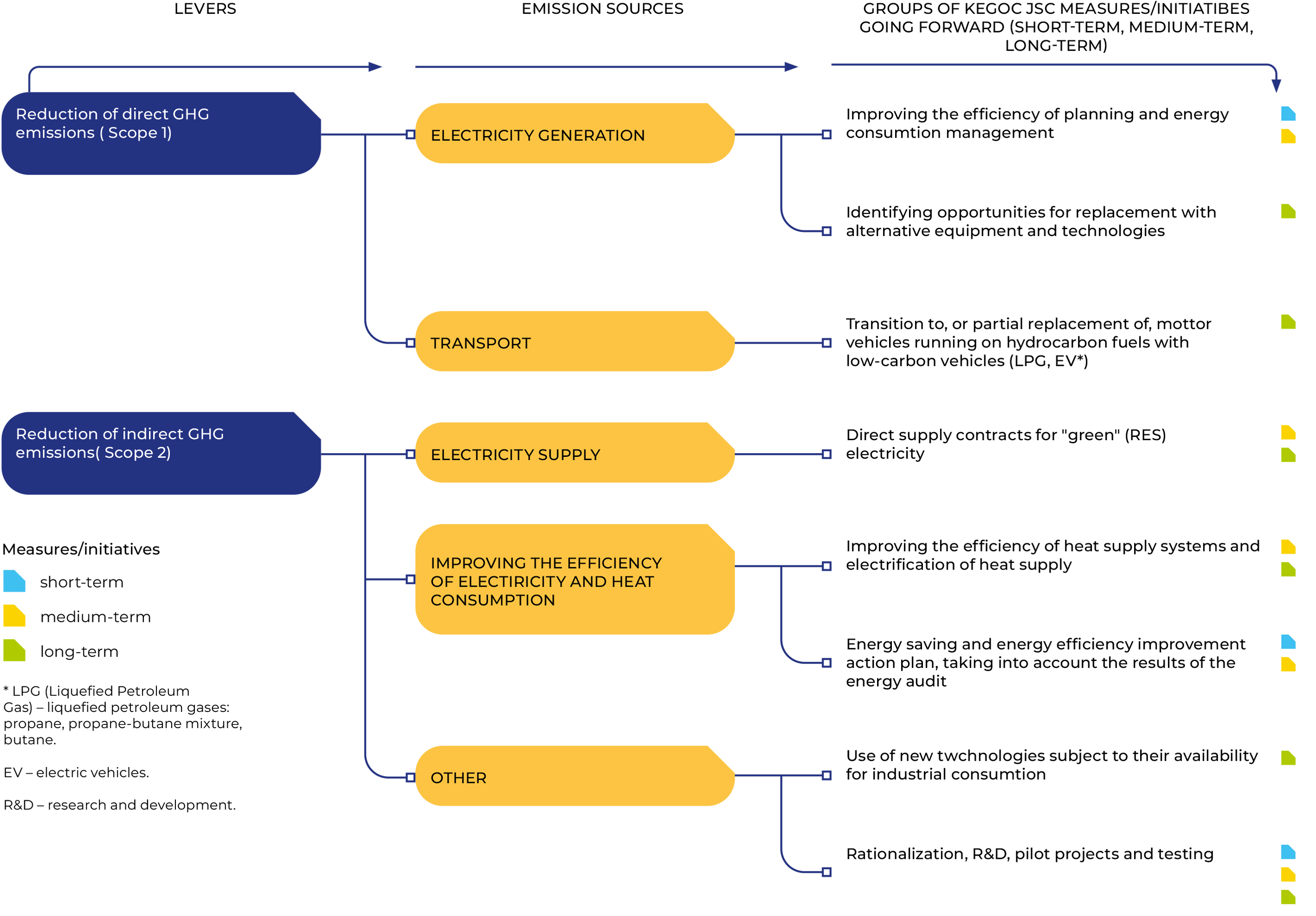
Reduction of Scope 1 emissions:
- Emissions from stationary sources: The Company conducts ongoing monitoring of fuel combustion levels, the technical condition of equipment, and the availability of equipment upgrades in domestic and international markets. The broader deployment of alternative technologies, where potentially available and effective, will contribute to reducing emissions, particularly in emergency situations where power supply is required to maintain telecommunications.
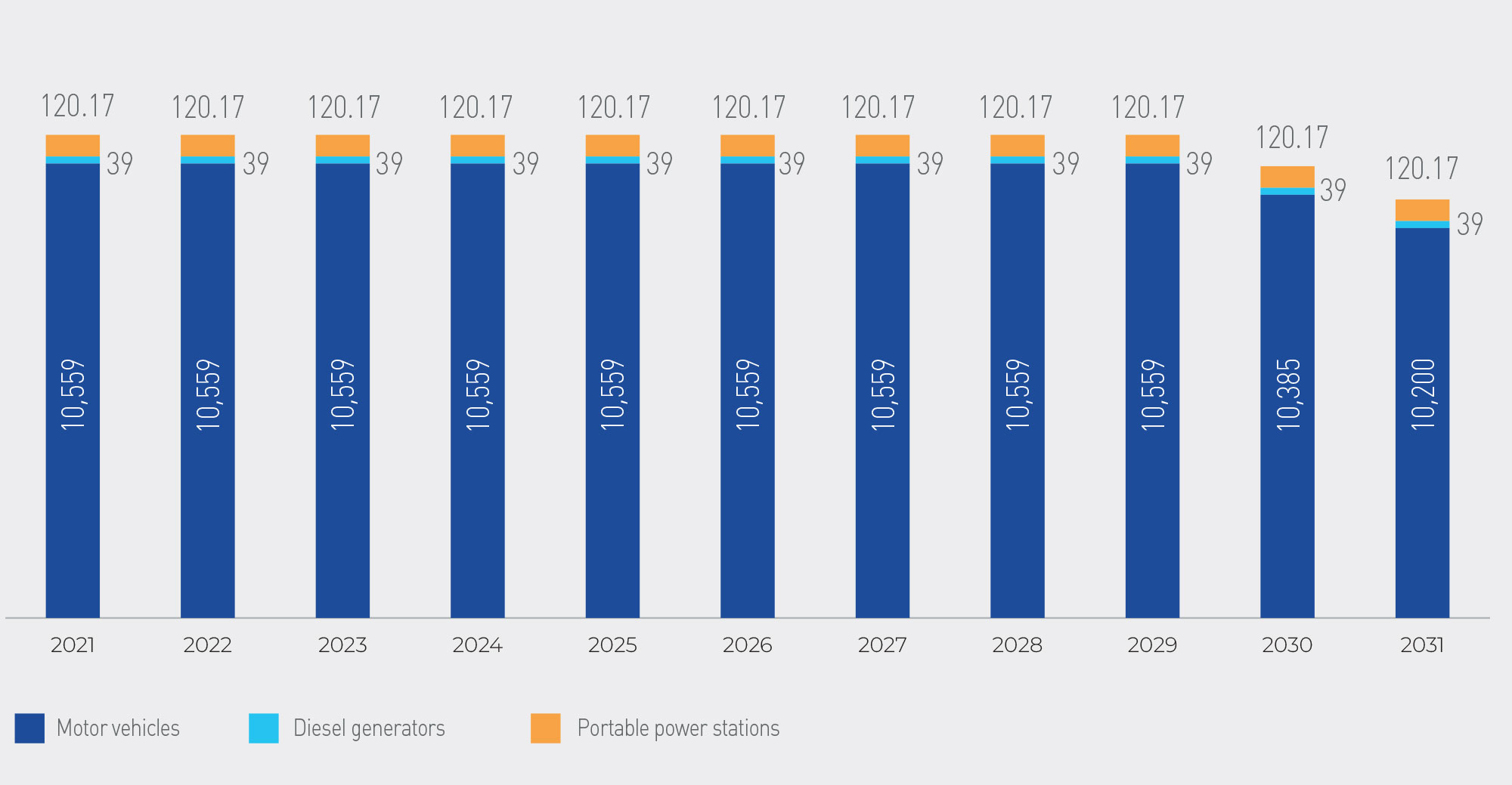
- Emissions from mobile sources: In 2030–2031, the Company plans to replace 19 passenger vehicles with internal combustion engines out of 115 vehicles with electric vehicles in Akmola MES, Almaty MES and the Executive Directorate. These vehicles are used for the transportation of production and administrative personnel. As a result of the planned measures, direct CO₂ emissions are expected to decrease by 2 % in 2030 and by 3 % in 2031.
Expected direct emissions of KEGOC JSC until 2031, tonnes of CO₂
Reduction of Scope 2:
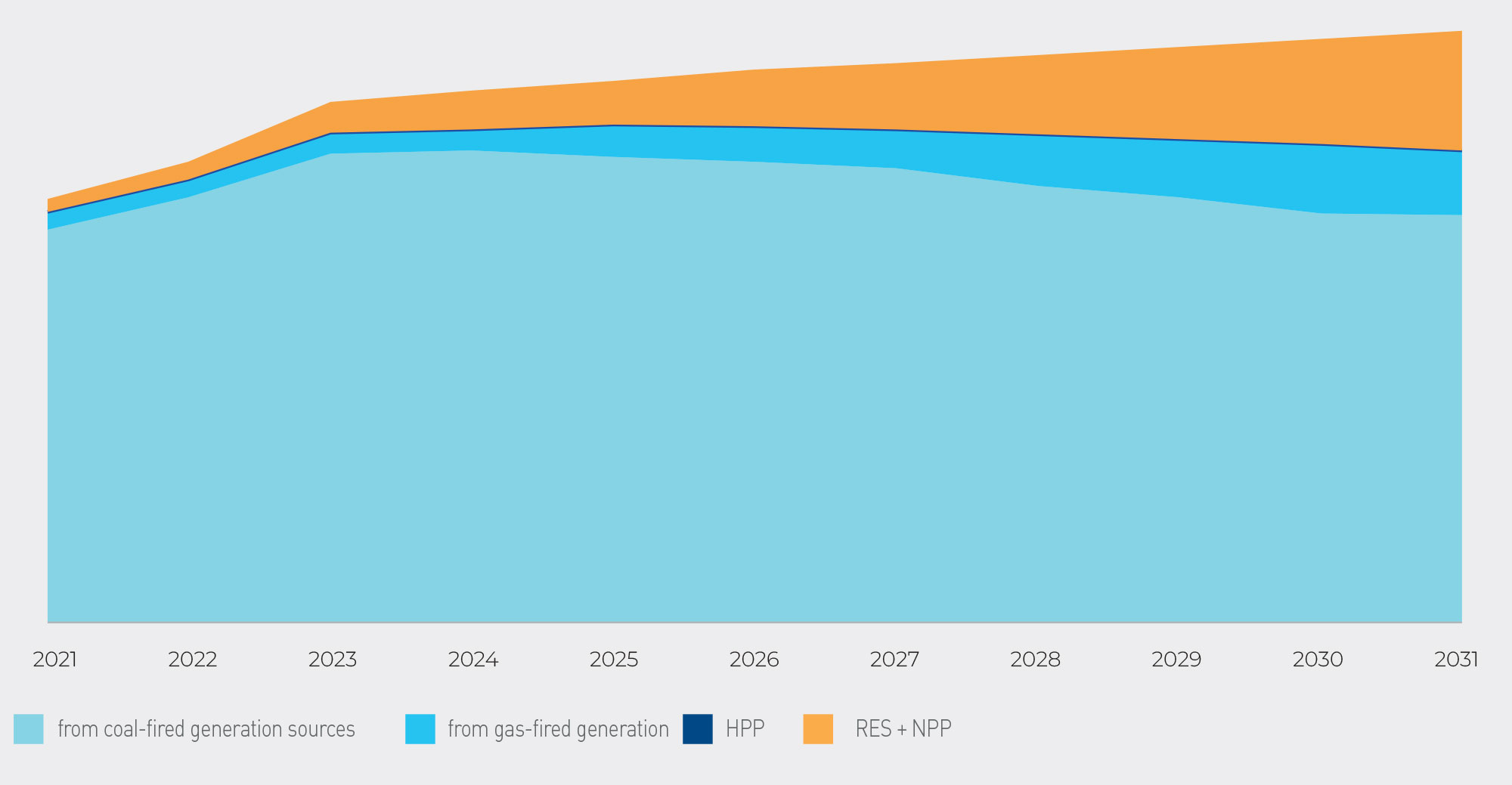
The Company purchases electricity for technological purposes, including electricity to compensate for technological electricity consumption during transmission through the National Power Grid of the Republic of Kazakhstan, as well as for auxiliary needs, from the Single Buyer, Financial Settlement Centre for Renewable Energy Sources LLP, which in turn purchases electricity from all electricity producers, including electricity generated by renewable energy facilities. In 2025, the share of renewable energy generation in total electricity generation amounted to 7.0 %. The projected share of “green” electricity in the volume of technological electricity consumption is expected to reach 12 % by 2028 and 19 % by 2032.
The Company actively participates in the improvement of national legislation, the implementation of National Power Grid development projects and the creation of conditions for the connection of renewable energy sources, as well as in the development and implementation of projects in the field of energy saving and energy efficiency.
Planned volumes of electricity purchases for compensation of technological consumption (Carbon Neutrality Scenario)
The key priorities of the Energy Efficiency and Energy Saving Policy include:
- optimization of energy metering and energy resource management systems;
- justification and standardization of target consumption indicators;
- enhancement of personnel competencies in energy saving;
- engagement with external partners to introduce innovative energy-saving solutions;
- involvement of employees in generating ideas and initiatives to reduce resource consumption;
- conducting energy audits and implementing the relevant measures;
- modernization of equipment with a transition to energy-efficient solutions, etc.
In the short and medium term, the Company is focused on implementing the Energy Saving and Energy Efficiency Action Plan for 2026–2031. Priority areas include modernization of lighting and heating systems, installation of energy-efficient boilers, replacement of doors, and insulation of buildings. The expected effect is a reduction in energy resource consumption by 1.8 thousand tonnes of fuel equivalent.
Further development provides for regular energy audits and the renewal of five-year programmes.
As part of KEGOC JSC’s digital transformation, the Company will introduce IoT, AI and cloud-based solutions to improve efficiency. In the area of R&D, the focus is on reducing technological electricity losses, including through robotic cleaning of conductors on the 500 kV North–South overhead transmission line. The Company intends to develop a medium-term project portfolio with the possibility of financing through the R&D fund of Samruk-Kazyna Group.
The steady increase in the share of electricity generated from renewable energy sources, together with ongoing energy saving and energy efficiency measures, enables the Company to plan a phased increase in the volume of electricity purchased from RES and to achieve the target of reducing Scope 2 emissions by 20 % by 2031.
Assessment of climate risks and opportunities
Climate modelling covers the period up to 2060, which has been selected in line with the Strategy for Achieving Carbon Neutrality of the Republic of Kazakhstan. Financial modelling of climate risks was carried out under four scenarios: RCP2.6, RCP4.5, RCP8.5 and NZE 2050. The modelling covers key financial metrics, including revenue, OPEX, CAPEX, EBITDA and operating profit. The analysis demonstrated the Company’s high resilience across all scenarios, including the RCP8.5 stress scenario. The models took into account potential changes in regulation, electricity prices, climate parameters and infrastructure requirements.
For each scenario, financial indicators were extrapolated through 2060 based on current data on revenue, expenses, capital expenditures and EBITDA. The financial assessments are based on KEGOC JSC’s full income and expense model, taking into account climate-related impacts on operating and investment cash flows.
The Company uses scenario analysis to assess climate risks and opportunities:
- The Carbon Neutrality scenario assumes an increase in the share of renewable energy sources, emission reductions and the deployment of energy-efficient technologies.
- The Business as Usual scenario demonstrates a potential increase in costs and a decline in competitiveness in the absence of climate-related reforms.
KEGOC JSC considers climate risks and opportunities across different time horizons:
- Short-term, until 2025: implementation of pilot projects, such as energy storage systems, execution of the Energy Saving Plan and introduction of monitoring systems.
- Medium-term, until 2031: achievement of Scope 1 and Scope 2 reduction targets and enhancement of power system resilience.
- Long-term, until 2060: achievement of carbon neutrality and full adaptation of infrastructure.
The climate risk assessment covers all stages of KEGOC JSC’s value chain. At the stages of design, construction and modernization of the National Power Grid, electricity transmission and generation forecasting, vulnerability to temperature and flood impacts is analysed. At the stages of equipment operation, dispatch control and balancing, exposure to extreme weather events is assessed, and emissions from stationary and mobile sources are monitored. At the energy consumption stage, indirect emissions associated with electricity use for technological needs are taken into account. In the area of innovation and R&D, technological solutions are being developed, including Smart Grid systems and energy storage systems. At the supply management stage, suppliers are assessed against ESG criteria, including environmental responsibility and compliance with sustainable development standards.
Climate risk assessment
The assessment of physical climate risks at KEGOC JSC was carried out using a scenario-based approach through 2060 and covers key climate parameters: temperature, floods and extreme weather events, with a focus on the vulnerability of critical assets. The analysis is based on RCP scenarios and reflects potential impacts on the Company’s infrastructure and financial performance.
List of indicators relevant to KEGOC JSC’s climate change analysis
Temperature
Type
Chronic
Indicator/unit of measurement
Annual minimum daily temperature, °C
Relevance for exposure risk analysis
Low temperatures may lead to equipment freezing, higher heating costs and ice accretion on transmission lines.
Type
Chronic
Indicator/unit of measurement
Annual maximum daily temperature, °C
Relevance for exposure risk analysis
Higher temperatures may lead to increased electricity consumption, overheat equipment, reduce its efficiency and accelerate wear.
Floods
Type
Acute
Indicator/unit of measurement
Flooding, m
Relevance for exposure risk analysis
Floods may cause short circuits, damage to substations and prolonged interruptions in power supply.
Extreme weather
Type
Acute
Indicator/unit of measurement
Maximum wind speed, m/s
Relevance for exposure risk analysis
Strong winds may damage overhead transmission lines, break supports and cause emergency situations due to trees falling on conductors.
Temperature: The increase in average and extreme temperatures is recognized as one of the key climate-related challenges. According to the modelling results, average surface air temperature may increase by up to 58.5 % by 2060 under the RCP8.5 scenario compared to the baseline level. Minimum temperatures are also projected to increase three- to fourfold, indicating a significant reduction in cold periods. The highest temperature increase is projected for the Turkestan region, where by 2060 the maximum temperature may reach 22.99°C and the minimum temperature 9.28°C. This may place additional pressure on transformer cooling systems, accelerate equipment ageing, increase the risk of insulation failures and reduce the transmission capacity of overhead lines due to overheating.
Floods: Flood risks are most significant in Atyrau and Mangystau regions. By 2060, under the RCP8.5 scenario, the average flood level in Mangystau may reach 0.7 m. This creates a risk of flooding of distribution points and substations, particularly in low-lying areas. Potential impacts include prolonged interruptions in electricity transmission, equipment damage and higher emergency restoration costs.
Extreme weather: Despite the projected overall decrease in maximum wind speed by up to 2.6 %, wind loads remain high in the northern and central regions. For example, in the North Kazakhstan region, even under the RCP8.5 scenario, maximum wind speed is projected to reach 39.52 m/s by 2060. This requires regular monitoring of the condition of overhead transmission lines, installation of damping devices and reinforcement of structures to prevent conductor breaks and deformation.
Turkestan, Almaty, Karaganda, Atyrau and Mangystau regions have been identified as the most vulnerable to physical climate risks. These regions host key Company assets exposed to significant climate-related pressures. Taking into account the specific characteristics of the assets, a list of priority adaptation measures has been developed for each region.
As part of climate modelling, KEGOC JSC quantified the potential financial impacts of physical climate risks over the period up to 2060. The analysis covers two key areas: risks driven by changes in climate parameters, including temperature, floods and extreme winds, and the costs of adaptation measures aimed at improving infrastructure resilience.
Without adaptation measures, cumulative financial losses from physical climate factors, including equipment overheating, substation flooding and wind-related damage, may reach KZT 261 billion by 2060. The cost of implementing adaptation measures, including infrastructure reinforcement, monitoring systems, modernization of cooling systems and deployment of smart management systems, is estimated at more than KZT 314 billion over the period from 2030 to 2060.
Assessment of transition risks
KEGOC JSC considers transition risks to be an important area of climate analysis. Particular attention is paid to the potential impacts of changes in public policy, regulatory requirements, technological standards and market conditions in the context of the global energy transition.
As part of the development of the Climate Programme, the Company assessed the financial impact of key transition risks on its operating and investment activities over the period up to 2060. The assessment was carried out under four climate scenarios, RCP2.6, RCP4.5, RCP8.5 and NZE 2050, taking into account such parameters as revenue, operating expenses, capital expenditures, EBITDA and operating profit.
The most significant risks are associated with stricter energy efficiency standards, higher electricity costs and the need to comply with new ESG requirements. Although KEGOC JSC is not subject to the emissions trading quota system and does not participate directly in the carbon market, regulatory changes affect the cost of purchased electricity and create the need for large-scale infrastructure modernization.
When conducting scenario analysis and assessing transition climate risks, KEGOC JSC takes into account the potential impact of changes in carbon regulation, electricity prices and climate policy requirements on the Company’s financial performance and investment decisions.
The analysis determined that approximately KZT 90 billion of investment will be required by 2060 to ensure compliance with new standards and improve energy efficiency. In the absence of these measures, financial impacts may reach KZT 138 billion from 2030 onwards. These estimates include both direct costs of technological upgrades and indirect costs associated with increased tariff pressure and regulatory constraints.
One of the priority measures is the introduction of advanced digital solutions and smart management technologies, including Smart Grid, aimed at improving the transparency and efficiency of electricity transmission. These technologies help reduce operating costs, improve the reliability of electricity supply and ensure compliance with the growing climate expectations of investors and regulators.
Assessment of climate-related opportunities
KEGOC JSC considers climate change not only as a source of risks, but also as a significant opportunity to improve resilience, accelerate technological modernization and enhance investment attractiveness. The assessment of climate-related opportunities covers areas such as the deployment of energy-efficient solutions, the use of smart energy management systems and the implementation of pilot energy storage projects.
One of the strategically important opportunities is the development of smart infrastructure. The pilot project for the installation of a 5 MW energy storage system in southern Kazakhstan will make it possible to assess the potential for increasing system flexibility, integrating renewable energy sources and improving peak load management. In the long term, this will create a basis for scalable solutions to modernize the national power system.
In addition, KEGOC JSC pays particular attention to improving energy efficiency through existing energy saving programmes, infrastructure modernization and the introduction of digital solutions. The Company has a system in place to motivate employees to submit rationalization proposals, while R&D activities are focused on developing solutions that contribute to reducing technological losses in electricity transmission.
Key financial impacts of climate risks
| Potential financial impacts of physical risks: | Potential financial impacts of transition risks: |
|---|---|
|
|
According to the calculations of the Climate Programme, the potential annual economic benefit from leveraging climate opportunities is estimated at KZT 5–10 billion per year starting from 2031. These benefits are driven by reductions in technological electricity losses, lower operational costs, improved energy efficiency, and a decreased risk of emergency outages. At the same time, annual investments in these areas are projected at KZT 4 billion, beginning in 2030.
Climate Change Risk Management
KEGOC JSC has implemented and consistently develops a risk management system based on the principles of the integrated COSO ERM model and the corporate requirements of Samruk-Kazyna JSC. The Corporate Risk Management System (CRMS) is an important element of the corporate governance system and is aimed at the timely identification, assessment and management of risks that may affect the achievement of the Company’s strategic and operational objectives.
The purpose of the CRMS is to ensure business continuity and resilience by minimizing the impact of external and internal factors, including climate change. Climate risk management is integrated into the overall risk management system: climate risks are identified, assessed and, where necessary, subject to quantitative analysis based on their potential financial impact. The assessment takes into account both current and expected regulatory requirements, including international standards such as GRI, SASB and ESRS.
The Board of Directors provides overall oversight of the risk management system, approves key documents and sets the “tone at the top” with regard to risk management. The Audit Committee under the Board of Directors oversees the effectiveness of the CRMS, including climate risk management. Documents submitted for approval by the Board of Directors are first reviewed by this Committee.
KEGOC JSC also takes climate and environmental risks into account in its engagement with suppliers. When selecting counterparties, the Company applies due diligence procedures, including questionnaires, assessment of compliance with environmental requirements, and screening against publicly available restrictions. Contracts include supplier obligations to comply with applicable standards, including those related to environmental protection, sustainable development and safety.
Climate opportunities are considered an integral part of KEGOC JSC’s strategic development. The development of resilient infrastructure, improvement of energy efficiency and support for national climate policy contribute to risk reduction and the creation of long-term value for all stakeholders.
Processes for identifying and assessing climate risks
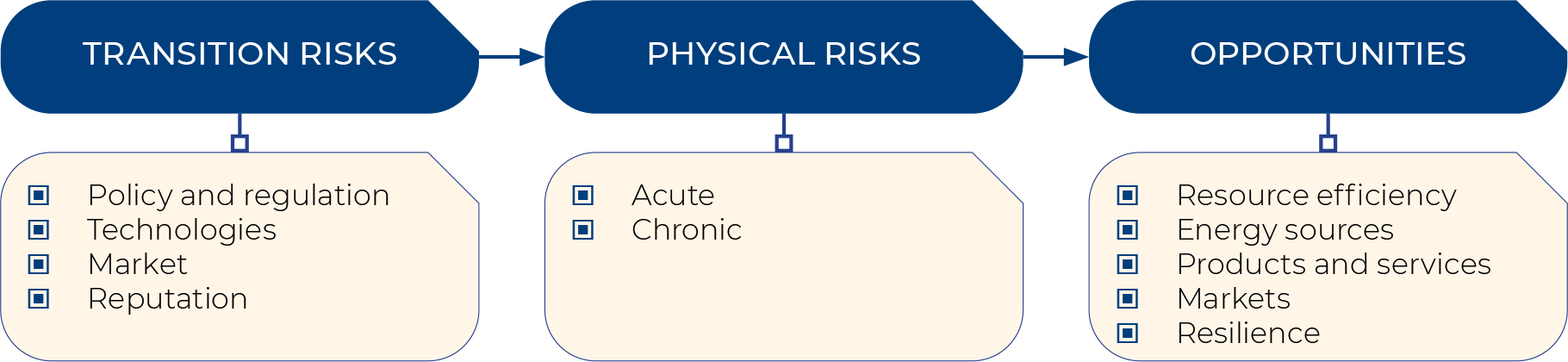
The Company classifies climate risks as physical risks, including acute and chronic risks, and transition risks, including policy, market, technology and reputation-related risks. Climate risks are identified taking into account their potential impact on the Company’s assets, processes and financial performance. Priority is assigned to risks that may affect the long-term resilience of KEGOC JSC or the achievement of its strategic objectives.
Categories of climate risks and opportunities
To assess the scale and significance of these risks, KEGOC JSC applies an adapted methodology based on the analysis of:
- geographical location of assets;
- climate scenarios, including RCP 2.6, RCP 4.5, RCP 8.5 and NZE 2050;
- projected climate impacts;
- historical climate data, including the Climate Change Knowledge Portal and RSE Kazhydromet;
- sensitivity of key assets to climate change;
- potential financial consequences, including impacts on EBITDA, operating expenses and restoration costs.
KEGOC JSC’s climate risk assessment covers the entire value chain, including upstream activities, such as suppliers of equipment and services, the Company’s own operations, and downstream activities, including users of the Unified Power System, distribution grid operators, capacity market participants and electricity producers, including renewable energy producers. Downstream risks include market and technological changes, climate events affecting load and demand, risks related to the stability of renewable energy generation, and transition risks associated with market decentralization.
Physical risks
The process of identifying physical climate risks is based on scenario analysis of climate change using international and national sources, including IPCC climate models under the RCP 2.6, RCP 4.5 and RCP 8.5 scenarios, the International Energy Agency’s NZE 2050 scenario, as well as long-term forecasts provided by RSE Kazhydromet.
An analysis of 83 substations and infrastructure facilities of KEGOC JSC was carried out across two main categories of physical risks:
-
Acute risks
Floods and high-water events that may lead to inundation of transformer substations, equipment damage and disruption of power supply; hurricanes, squalls and thunderstorms that may cause the destruction of transmission line towers, conductor breaks and widespread outages; heavy snowfall and ice accretion leading to ice build-up on overhead transmission lines, increased structural load and higher accident rates. -
Chronic risks
An increase in average annual temperatures, which intensifies thermal load on equipment, increases grid losses and accelerates asset wear; changes in precipitation and humidity patterns, which may affect soil stability, cause corrosion of structures and require additional infrastructure reinforcement measures; longer hot periods requiring additional equipment cooling and higher maintenance costs; and increased corona losses due to high humidity and temperature, particularly in the southern and Caspian regions.
The risk assessment was performed using a multi-criteria analysis methodology, including:
- probabilistic assessment of climate event occurrence, based on meteorological scenarios through 2100;
- assessment of the vulnerability of specific infrastructure assets;
- determination of the potential impact on the functioning of the system and the Company’s business.
In addition, regional risk stratification was carried out taking into account Kazakhstan’s geographic and climatic heterogeneity. This made it possible to identify the most sensitive zones: the south of the country is exposed to heat-related risks, the west to flood risks, and the central and eastern regions to combined climate impacts.
KEGOC JSC’s value chain and associated climate risks
| Business aspect | Risk category | Subcategory | Detailed description of climate risk | Illustrative description of impact |
|---|---|---|---|---|
| Operations and Infrastructure | Chronic | Temperature | A sustained increase in temperature increases the load on transmission lines and equipment, causing overheating and accelerated ageing. |
|
| Infrastructure | Chronic | Temperature | High temperatures may affect transformer cooling systems, increasing the likelihood of equipment failure. |
|
| Operations | Chronic | Increased humidity and precipitation | Increased precipitation may affect infrastructure resilience and require additional measures to protect assets from erosion and washouts. |
|
| Acute | Floods | Floods and high-water events may inundate substations, causing equipment damage and system disruptions. |
|
|
| Chronic | Extreme weather, including wind load | Strong winds and storms may damage or break conductors and destroy supports, leading to disruptions in electricity transmission. |
|
Transition risks
KEGOC JSC carries out systematic work to identify transition climate risks in accordance with the TCFD recommendations and the requirements of IFRS S1 and IFRS S2. The analysis is performed on a regular basis, taking into account the specific features of the electric grid sector and the current regulatory landscape. The Company considers legal, technological and market risks as the key categories of transition risks.
Legal risks
The transition to a low-carbon economy is accompanied by the strengthening of climate regulation. As part of the identification of legal risks, KEGOC JSC takes into account potential legislative changes, including the establishment of emission standards, the introduction of internal and external carbon pricing mechanisms, and requirements for expanded ESG disclosure. These changes may result in additional financial and operating costs, including investments in infrastructure modernization and the strengthening of compliance processes.
Climate-related litigation, which is actively developing globally, is also a significant source of legal risks. Its growth increases requirements for reporting transparency and the evidence base supporting companies’ actions in climate risk management, which leads to greater attention to the accuracy of ESG data and disclosures.
Technological risks
KEGOC JSC monitors technological trends that contribute to the reduction of GHG emissions, including the development of renewable energy sources, energy storage systems and digital solutions. Despite their potential to improve efficiency, these technologies require significant investment, modernization of operating processes and adaptation of grid infrastructure. The Company takes into account potential risks associated with delayed implementation of technological solutions, technological obsolescence or limited availability of innovations required to achieve climate targets.
Market risks
The formation of sustainable demand for green energy and consumer preferences for low-carbon solutions affect the market environment. KEGOC JSC considers changes in consumer expectations, partner requirements and financing conditions as factors that may affect demand, cost of capital and the Company’s position in the value chain. These risks require adaptation of the business model, transformation of operating activities and strengthening of investment attractiveness through active participation in the climate agenda.
Climate Programme
In 2024, KEGOC JSC approved the Climate Programme for 2025–2060 as a key strategic document in the area of climate risk management. The Climate Programme is aimed at ensuring the resilience of electric grid infrastructure to changing climate conditions and has been developed in accordance with international standards, including the TCFD recommendations, as well as IPCC and IEA climate scenarios.
The document includes an assessment of physical and transition risks, modelling of the impact of different climate scenarios on 83 substations, analysis of asset vulnerability and identification of priority adaptation measures. The Climate Programme reflects the specific features of the energy sector, taking into account the geography of assets and the nature of KEGOC JSC’s system functions.
Climate risks are integrated into the Company’s unified corporate risk register, where they are assessed at the level of subsidiaries and transferred to the Unified Risk Management Centre. Risks are classified, assigned a status, either acceptable or requiring response, and accompanied by control measures.
The Board of Directors of KEGOC JSC provides strategic oversight in this area. The Audit Committee reviews risks as part of non-financial reporting, while the Management Board, with the participation of the Coordination Council for Sustainable Development and IMS, is responsible for implementing the provisions of the Climate Programme.
Climate change metrics and targets
GRI 305-1, GRI 305-2, GRI 305-4, GRI 305-5
As an electric grid company and the System Operator, KEGOC JSC’s most significant contribution to environmental protection lies in supporting the decarbonization of the economy of the Republic of Kazakhstan through the integration of renewable energy sources into the country’s Unified Power System.
Integration of the low-carbon agenda enables KEGOC JSC not only to perform its role as the System Operator in the technical connection of renewable energy sources, but also to strengthen its investment attractiveness, meet investor expectations and demonstrate sustainable climate ambitions.
GHG emissions inventory
KEGOC JSC conducts an annual greenhouse gas (GHG) emissions inventory in accordance with internationally recognized approaches, including the methodology of the Intergovernmental Panel on Climate Change (IPCC, 2006), the Greenhouse Gas Protocol (GHG Protocol), and the provisions of the Paris Agreement. The GHG inventory report is consolidated at the corporate level, applying the operational control approach to define organizational boundaries. In 2022, the Company prepared its first full report in accordance with these standards and established 2022 as the base year. Recalculation of the base year is envisaged in the event of changes in the methodology applied, expansion of the coverage of emission sources, or clarification of input data.
The inventory covers CO₂, CH₄, N₂O and SF₆. Global warming potentials are applied in accordance with the IPCC Fifth Assessment Report (AR5), ensuring comparability of data with international practice.
The main sources of direct emissions, Scope 1, include:
- mobile sources – vehicles used in production and repair activities;
- stationary sources – generators and power plants used in emergency modes and during maintenance;
- SF₆ circuit breakers operated at substations.
Emissions from air-conditioning systems are not included in the report due to their immateriality. The Company is considering expanding the coverage of emission sources as the data collection system improves.
Indirect energy emissions under Scope 2 include:
- emissions associated with electricity consumption for technological and auxiliary needs, including technological electricity losses during transmission through the National Power Grid;
- emissions from heat consumption.
Scope 3 emissions are not included in the 2025 report due to the ongoing development of the methodological framework and data collection system.
The Company considers Scope 3 disclosure to be a phased process requiring the development of internal accounting processes, improvement of the methodology, and engagement with suppliers and contractors in accordance with the requirements of the GHG Protocol.
To gradually expand the coverage of the inventory, KEGOC JSC is carrying out preparatory work to assess the applicability of individual Scope 3 categories. In 2025, the Company’s specialists completed specialized training on the calculation and disclosure of Scope 3 emissions.
At present, the Company is considering approaches to organizing data collection and assessing individual Scope 3 categories, including emissions associated with the activities of contractors and project implementation.
KEGOC JSC is considering the possibility of beginning disclosure of selected Scope 3 categories from 2027, after the methodology has been developed and data collection processes have been established.
The emissions inventory is integrated into the environmental management system and is used in climate risk assessment and in planning decarbonization measures. KEGOC JSC is not subject to the national greenhouse gas emissions quota system, as its emissions are below the thresholds established by the Environmental Code of the Republic of Kazakhstan. Nevertheless, the Company voluntarily conducts a full greenhouse gas emissions inventory in line with the international commitments of the Republic of Kazakhstan under the United Nations Framework Convention on Climate Change, the Kyoto Protocol and the Paris Agreement, as well as the Company’s corporate carbon footprint reduction objectives.
GHG emissions analysis
Greenhouse gas emissions indicators for 2025
GRI 305-1, GRI 305-2
| Emissions | Total, tCO₂-eq | CO2₂ (t) | CH₄ (tCO₂-eq) | N₂O (tCO₂-eq) | SF₆ (tCO₂-eq) |
|---|---|---|---|---|---|
| Scope 1 | 10,724.31 | 9,369.35 | 45.69 | 121.35 | 1,187.93 |
| Scope 2 | 2,382,629.37 | 2,382,629.37 | – | – | – |
Emissions indicators, tonnes of CO₂ equivalent
GRI 305-1, GRI 305-2
| Emissions | 2022 | 2023 | 2024 | 2025 |
|---|---|---|---|---|
| Scope 1 | 8,887 | 10,339 | 13,491 | 10,724 |
| Scope 2 | 2,692,188 | 2,524,980 | 2,357,187 | 2,382,629 |
| Total | 2,701,075 | 2,535,319 | 2,370,678 | 2,393,354 |
Direct emissions are mainly generated by vehicles used in production and repair activities, as well as by stationary and portable generators used for emergency power supply. Additional emissions may arise from leakages of sulphur hexafluoride (SF₆) used in high-voltage circuit breakers at 110–500 kV substations.
In 2025, direct greenhouse gas emissions, Scope 1, amounted to 10,724 tonnes of CO₂ equivalent, which is 2,766 tonnes lower than in 2024. The decrease was driven by the implementation of the maintenance and repair programme for SF₆-insulated equipment, including sealing measures and modernization of components with an increased risk of leakage.
KEGOC JSC operates high-voltage SF₆ circuit breakers supplied by leading global manufacturers, including ABB, Siemens and General Electric, which ensure a high level of operational reliability. The equipment is maintained by qualified personnel in accordance with internal regulations and international technical standards. In 2021–2025, the average SF₆ leakage rate was 0.12 % per year, which is in line with international best practice for 220–500 kV equipment. At present, technologically mature alternatives to SF₆ for 220–500 kV voltage class equipment remain limited. At the same time, the Company monitors the development of international solutions for the transition to vacuum technologies and plans to use 110 kV vacuum circuit breakers as part of the project “Reconstruction of the 220/110/6 kV Mirgalimsay substation”. Management of SF₆ emissions is integrated into the Company’s environmental management system and climate strategy. The Company applies a systematic approach to managing risks associated with the use of SF₆, including:
- continuous monitoring of leakages and gas inventory;
- modernization of equipment under the investment programme;
- reduction of SF₆ use in 35 kV switchgear through the installation of vacuum circuit breakers.
The main volume of indirect greenhouse gas emissions under Scope 2 is associated with the consumption of electricity purchased by the Company to compensate for technological losses during electricity transmission through the National Power Grid. Such losses are an inherent feature of the operation of backbone power grids and are determined by the physical characteristics of long-distance electricity transmission, as well as by power system operating modes, the configuration and length of transmission lines, electricity flow volumes and climatic conditions.
As of the end of 2025, indirect Scope 2 emissions amounted to 2,382,629 tonnes of CO₂ equivalent, increasing by 25,442 tonnes, or 1 %, compared to 2024. This change was mainly associated with the growth of electricity generation in the Republic of Kazakhstan, which reached 123,110.9 million kWh in 2025, up 4.4 % year-on-year. The increase in generation volumes, together with higher loads and electricity flows in the power system, led to an increase in the volume of electricity purchased by the Company to compensate for technological losses during electricity transmission through the grid.
Scope 2 emissions are calculated using the market-based methodology based on data on the electricity generation mix by fuel type from the Single Buyer (see Table 39). This approach enables a more accurate reflection of the carbon intensity of purchased electricity and is consistent with the unified methodological principles applied across the Samruk-Kazyna Group, as well as with international climate disclosure practice.
Despite the impact of system-wide factors, the Company implements a comprehensive set of measures aimed at improving energy efficiency and reducing technological losses. In particular, KEGOC JSC optimizes the operating modes of the Unified Power System of the Republic of Kazakhstan, modernizes grid infrastructure and implements the Energy Saving and Energy Efficiency Action Plan for 2021–2025, which helps limit the growth of energy consumption for own and auxiliary needs.
Total greenhouse gas emissions under Scope 1 and Scope 2 amounted to 2,393,354 tonnes of CO₂ equivalent in 2025, remaining below the levels recorded in 2022 and 2023. This reflects the gradual reduction of the carbon intensity of the Company’s operations amid growing electricity generation in the country and increasing loads in the power system.
GRI 305-4
GHG emissions intensity in 2022–2025
| 2022 | 2023 | 2024 | 2025 | |
|---|---|---|---|---|
| Total greenhouse gas emissions, Scope 1 and Scope 2, tCO₂-eq | 2,701,075 | 2,535,319 | 2,370,678 | 2,393,354 |
| Revenue, thousand KZT | 217,255,600 | 252,136,383 | 319,905,932 | 397,736,712 |
| Total GHG emissions intensity, Scope 1 and Scope 2, tCO₂-eq/thousand KZT | 0.012 | 0.010 | 0.0074 | 0.0060 |
In the reporting year, total GHG emissions intensity, Scope 1 and Scope 2, amounted to 0.0060 tCO₂-eq/thousand KZT, decreasing by 19 % compared to 2024, which was driven by an increase in the volume of electricity transmission.
GRI 305-5
Reduction of greenhouse gas emissions resulting from the implementation of energy saving and energy efficiency measures
| 2022 | 2023 | 2024 | 2025 | |
|---|---|---|---|---|
| Reduction of greenhouse gas emissions, tCO₂-eq | 3,133.11 | 8,648.94 | 9,045.42 | 8,980.43 |
The measures that resulted in the reduction of greenhouse gas emissions relate to Scope 2 and included measures aimed at reducing electricity and heat consumption. The calculation of greenhouse gas emission reductions used the same methodology and standards, covered the same gases, and applied the same base year as those used for the calculation of greenhouse gas emissions for 2025.
Climate change targets
KEGOC JSC has set quantitatively measurable targets for reducing greenhouse gas emissions under the Low-Carbon Development Programme approved in 2021. The Company has defined 2021 as the base year for its climate targets. At the same time, 2022 is considered by the Company as the base year for verified corporate greenhouse gas emissions reporting. The Company’s targets have been developed taking into account the Strategy for Achieving Carbon Neutrality of the Republic of Kazakhstan until 2060 and the role of KEGOC JSC as the System Operator and operator of the National Power Grid, which provides the infrastructure conditions for the integration of renewable energy sources, enhancement of power system flexibility, and development of low-carbon energy.
Targets for reducing greenhouse gas emissions
| Indicator | Target year | Target value |
|---|---|---|
| Scope 1 | 2031 | 3 % reduction in Scope 1 emissions |
| Scope 2 | achievement of a 20 % share of “green” electricity in the structure of purchased electricity | |
| Scope 1 | 2060 | 58 % reduction in Scope 1 emissions |
| Scope 2 | 100 % reduction in Scope 2 emissions |
Achievement of the Scope 1 targets is planned through the phased replacement of vehicles with internal combustion engines with vehicles using low-carbon fuels, including electric vehicles and LPG-powered vehicles.
For Scope 2, the Company considers the expansion of opportunities for integrating renewable energy sources into the power system of the Republic of Kazakhstan, the development of grid infrastructure, enhancement of the flexibility and resilience of the power system, reduction of technological electricity losses in the National Power Grid, and improvement of equipment energy efficiency as the key areas of low-carbon development.
To achieve these objectives, KEGOC JSC implements projects aimed at modernizing overhead transmission lines and substation equipment, replacing transformers with more energy-efficient models, developing the Smart Grid, introducing WAMS, WACS and CSPA digital solutions, and upgrading SCADA/EMS.
The Company is also implementing a pilot project for the deployment of electricity storage systems, aimed at enhancing the flexibility of the power system and further integration of renewable energy sources.
In addition, measures are being implemented to optimize power system operating modes, including the regulation of reactive power flows, optimization of power flow distribution, and maintenance of optimal voltage levels at network nodes. The Company considers the implementation of energy saving and energy efficiency measures as one of the tools for reducing technological electricity losses and supporting low-carbon development.
The Company’s long-term vision includes the gradual reduction of direct and indirect greenhouse gas emissions, development of infrastructure for the integration of renewable energy sources, improvement of energy efficiency, and introduction of low-carbon technologies.
The Company’s approaches to low-carbon development are implemented under the Low-Carbon Development Programme of KEGOC JSC, the Climate Programme, and through participation in the international Utilities for Net Zero Alliance (UNEZA) initiative.
In addition to implementing its low-carbon development programmes, KEGOC JSC joined the global Utilities for Net Zero Alliance (UNEZA), officially launched at COP28 in Dubai with the support of IRENA and the UN Climate Change High-Level Champions. The Alliance brings together leading global energy companies with the aim of accelerating the energy transition and achieving carbon neutrality. Within UNEZA, KEGOC JSC will contribute to the development of grids ready for the integration of renewable energy sources, modernization of energy infrastructure, and strengthening of international cooperation in low-carbon development. The Company’s participation in the Alliance underscores its commitment to achieving the climate goals set out in the national Strategy for Achieving Carbon Neutrality and the corporate Low-Carbon Development Programme of KEGOC JSC.
KEGOC JSC considers the achievement of carbon neutrality as a long-term strategic development priority of the Company, in line with the Strategy for Achieving Carbon Neutrality of the Republic of Kazakhstan until 2060.
The Company views its climate targets as one of the elements of its long-term strategic development, and KEGOC JSC plans to regularly review its benchmarks taking into account technological innovation, policy developments, and changes in the structure of the energy market.