



Environmental Protection
Key indicators for 2025
Total greenhouse gas emissions (Scope 1 and Scope 2)
2,393,354
tonnes of CO₂-eq

Reduction in greenhouse gas emissions due to energy-saving and energy efficiency measures:
8,980.43
tonnes of CO₂-eq

Contribution to the UN SDGs
Key documents in the area of environmental protection
- Development Plan (Strategy) of KEGOC JSC for 2023–2032
- Sustainable Development Management System Manual
- Environmental Policy
- Objectives in the areas of quality, environment, occupational health and safety
- Register of Environmental Aspects
- Environmental Management System Planning Standard
- Waste Management Standard
Environmental Protection Policy
KEGOC JSC considers environmental protection activities as an integral part of its daily work. A responsible attitude to the environment is a key principle of the KEGOC JSC Environmental Policy.
The environmental policy of KEGOC JSC is aimed at minimizing the negative impact on the environment, reducing the carbon footprint, increasing the level of environmental safety, responsibility for ensuring environmental protection during the development of the NPG of the Republic of Kazakhstan, energy conservation and rational use of natural and energy resources in the Company’s activities. The Environmental Policy applies to all employees of KEGOC JSC, as well as to suppliers, employees of contractors and organizations providing services at the Company’s facilities, on the terms specified in the concluded contracts. The management of KEGOC JSC assumes responsibility for the implementation of the obligations assumed in accordance with the Environmental Policy for continuous improvement and prevention of pollution, as well as compliance with applicable legislative and other requirements to which KEGOC JSC is related in terms of its environmental aspects. Each employee of the Company, as well as employees of contractors working in the interests of the Company, are familiar with the Environmental Policy of KEGOC JSC.
GRI 2-23, GRI 2-24
The Company has implemented and successfully operates an Environmental Management System (EMS) based on the international standard ISO 14001. The EMS forms part of the Company’s integrated management system and applies to the activities of KEGOC JSC structural divisions and a subsidiary within the established scope of application. The requirements of the Environmental Policy and applicable environmental requirements are also communicated to suppliers and contractors under the terms of the concluded contracts.
The scope of application of the EMS covers the performance of the system operator’s functions in the power industry: provision of system services to wholesale market entities for the transmission of electricity through the National Power Grid, technical dispatch control, and balancing of electricity generation and consumption.
To confirm compliance with international environmental management standards, in 2023 the Company underwent a certification audit by the independent certification body "MS CERTIFICATION SERVICES PRIVATE LIMITED" (India). In 2025, the Company completed a surveillance audit, which confirmed that the EMS remains compliant with ISO 14001 requirements.
The certification scope includes the head office of KEGOC JSC, all nine MES branches, the National Dispatch Centre of the System Operator branch, and Energoinform JSC. Accordingly, ISO 14001:2015 certification covers 100 % of the Company’s branches and the operational perimeter associated with performing the functions of the NPG system operator.
In connection with changes to the electricity market model and the update of the list of principal services of KEGOC JSC in 2023, certain types of system services were clarified in the Company’s current service list. These changes did not affect the main operational perimeter of the EMS. An update to the certification scope wording in line with the current list of principal services is planned as part of the next certification cycle in 2026.
To ensure effective EMS management, the 2025 Register of Environmental Aspects of KEGOC JSC has been developed. The identification process includes the analysis of all components of the Company’s environmental impact (energy efficiency, biodiversity, water, soil, emissions, and waste). Management actions for these aspects are defined in the Company’s Environmental Programme for 2025.
The following have been identified as priority environmental aspects for 2025:
- Potential PCB-containing waste, due to polychlorinated biphenyls (PCBs) being classified as hazardous substances under the Environmental Code of the Republic of Kazakhstan;
- Transformer oil and used transformer oil, due to the presence of oil-filled equipment at the Company’s facilities.
Environmental Responsibility and Community Engagement
The Company systematically implements measures aimed at compliance with environmental requirements, reduction of environmental impact, and development of an environmentally responsible corporate culture.
On an annual basis, mandatory and voluntary environmental insurance agreements are concluded with all MES branches, enabling the minimization of environmental risks and providing additional environmental protection.
During the year, on-site environmental monitoring of production facilities at five MES branches – Almaty, Sarbai, Western, Eastern, and Aktobe – was conducted to verify compliance with the environmental legislation of the Republic of Kazakhstan.
In the course of implementing major infrastructure projects, as well as to ensure effective engagement with local communities, the Company maintains an open public dialogue.
Public hearings were held for the project “Integration of the Western Kazakhstan Energy System with the Unified Power System of Kazakhstan” at the construction and installation works stage. Public hearings were also held for the project “Strengthening the External Power Supply Scheme of Astana City. Construction of Power Grid Facilities.” Following the hearings, a positive conclusion to the Environmental Impact Assessment report was received, confirming the project’s compliance with environmental requirements.
In support of the national “Taza Qazaqstan” initiative, clean-up days, waste-sorting workshops, and other environmental activities for employees were held at all Company branches throughout the year. As part of these initiatives, the branches planted 4,690 tree seedlings, and employees of the Executive Directorate in Astana additionally planted 90 trees on the grounds of two city schools.
All nine MES branches and the Executive Directorate participated in the Smart Plastic
Zone project, aimed at fostering a culture of responsible plastic use and implementing environmentally sustainable practices. Following the assessment of submissions, all branches were awarded GOLD status, and the Executive Directorate received the highest award – PLATINUM.
To enhance competencies and ensure compliance with environmental legislation, in May 2025, corporate training was organized for MES branch employees responsible for environmental protection, dedicated to amendments and updates to the Environmental Code of the Republic of Kazakhstan.
In addition, as part of the “Taza Qazaqstan” programme, Company employees participated in a specialized waste-sorting training to develop a pool of internal eco-trainers. Ten employees completed the training and subsequently conducted waste-sorting workshops at their branches, disseminating environmental practices within the Company.
GRI 2-27
Throughout 2025, KEGOC JSC was not subject to any financial or non-financial sanctions, nor were there any significant fines related to violations of environmental legislation or regulatory requirements.
GRI 2-25
In addition, no complaints were received from stakeholders regarding negative environmental impacts during the reporting period.
Effect on Atmospheric Air
GRI 3-3
KEGOC JSC actively works to minimize the impact of its operations on atmospheric air.
The Company uses equipment and technologies that, in most cases, are not associated with direct atmospheric emissions, since KEGOC JSC’s core activity involves the transmission of electric power via high-voltage transmission lines.
In accordance with the decision of the authorized environmental protection body, all MES branches are classified as Category IV facilities, for which emission standards are not subject to establishment.
Emissions of air pollutants are calculated using estimation methods, based on the number of operating hours of each unit of equipment and material consumption, in accordance with the official methodologies for calculating air pollutant emissions of the Republic of Kazakhstan.
International ISEP
The Director of the OHS&PS Department and the Lead Engineer of the Production and Technical Service of the Almaty MES branch completed a two-week ISEP (Institute of Sustainability and Environmental Professionals) training course. Upon successful completion of the modular examinations, they received International Certificates in Environmental Management, confirming a high level of professional expertise in the field of sustainable development.
GRI 305-7
Air pollutant emissions*, tonnes
| Air pollutant emissions | 2023 | 2024 | 2025 |
|---|---|---|---|
| Sulfur dioxide (SOx) | 0.406 | 0.376 | 0.2869007 |
| Particulate matter (PM) | 0.059 | 0.051 | 0.0436786 |
| Carbon monoxide (CO) | 0.252 | 0.277 | 0.1936622/td> |
| Volatile organic compounds (VOCs) | 0.290 | 0.243 | 0.1714727 |
| Other** | 0.179 | 0.146 | 0.2268886 |
*Note: emissions from stationary sources. According to the Tax Code of the Republic of Kazakhstan, emissions from mobile sources are not subject to calculation; instead, the amount of fuel consumed is reported. The Company does not operate processes or installations generating significant direct mercury emissions; therefore, this indicator is not applicable.
** Unlike previous annual reports, a new category “Other” has been added to the 2025 Annual Report.
To ensure uninterrupted operation of its infrastructure, KEGOC JSC utilizes motor vehicles and mobile units. In 2025, the Company conducted regular technical maintenance of its fleet to minimize air emissions. Vehicle inspections were also carried out to check the toxicity and opacity of exhaust gases released into the atmosphere.
GRI 305-6
In its operations, the Company does not emit ozone-depleting substances that contribute to climate change.
Impact on Water Bodies
GRI 3-3, GRI 303-1, GRI 303-2
KEGOC JSC does not use water in its technological processes. The Company’s activities are not water-intensive, as electricity transmission and dispatch processes do not require water for production or cooling. Due to the nature of the Company’s activities, total water consumption remains insignificant and has no material impact on water resources.
Water is consumed exclusively for domestic and sanitary needs and is sourced from municipal water supply systems and wells. No water is withdrawn from surface sources such as rivers, lakes, or other bodies of water.
Eight MES branches operate artesian water supply systems, with wells used in accordance with the permits for special water use. In line with the Water Code of the Republic of Kazakhstan, underground water monitoring is carried out on an ongoing basis at the well water intakes under contracts with specialized organizations.
Potential sources of water and soil pollution at the Company’s facilities include:
- Transformer oil used in oil-filled equipment;
- Wastewater generated from domestic water use.
To minimize environmental impact, KEGOC JSC prioritizes environmentally friendly equipment when making procurement decisions. The Company regularly replaces oil circuit breakers with safer SF₆ and vacuum alternatives, contributing to the reduction of transformer oil use at MES branch substations.
The use of oil-free equipment increases reliability and fire safety while also eliminating the risk of underground water and soil contamination. Oil-filled equipment is equipped with oil catchment systems or containment trays to prevent oil from entering the soil. The integrity of oil containment bunds is regularly inspected.
Given the nature of the Company’s activities and its low water consumption levels, approaches to rational water resource use are implemented within the Company’s existing EMS and the operational activities of branches. As part of industrial environmental control, the technical condition of water supply and drainage systems is monitored, and measures are taken to prevent leaks and reduce potential impacts on water resources. Issues of rational use of natural resources, including water resources, are addressed within internal environmental training activities for Company employees.
GRI 303-3, SASB IF-EU-140a.1
Recirculated water is not used due to the absence of technological processes requiring water consumption. The Company does not withdraw surface, marine, or formation water.
KEGOC JSC water withdrawal indicators, megaliters
| By source type | 2023 | 2024 | 2025 |
|---|---|---|---|
| Groundwater (wells), including: | 41.11 | 37.97 | 37.74 |
| Freshwater (mineralization up to 1,000 mg/L) | 22.76 | 27.88 | 27.22 |
| Technical water (over 1,000 mg/L) | 19.36 | 10.10 | 10.52 |
| of which, in regions with water scarcity* | 9.84 | 7.07 | 6.12 |
| Third-party water (municipal supply and delivered), including: | 65.86 | 69.23 | 80.93 |
| Freshwater (mineralization up to 1,000 mg/L) | 53.06 | 58.62 | 68.22 |
| Technical water (over 1,000 mg/L) | 12.80 | 10.60 | 12.70 |
| of which, in regions with water scarcity* | 9.83 | 9.02 | 10.35 |
| Total | 106.98 | 107.20 | 118.67 |
| of which, in regions with water scarcity* | 19.67 | 16.09 | 16.46 |
GRI 303-4
KEGOC JSC water discharge indicators, megaliters
| By source type | 2023 | 2024 | 2025 |
|---|---|---|---|
| Third-party organizations (wastewater disposal) | 49.54 | 46.46 | 61.35 |
| Freshwater (mineralization up to 1,000 mg/L) | 41.12 | 38.47 | 52.1 |
| of which, in regions with water scarcity* | 3.80 | 3.96 | 3.97 |
| Technical water (over 1,000 mg/L) | 8.43 | 7.99 | 9.25 |
| of which, in regions with water scarcity* | 0.95 | 1.08 | 1.28 |
* Regions with water scarcity include the territories of the Southern and Western MES branches of KEGOC JSC. Data from the Water Risk Filter were used to identify water-stressed regions, in accordance with the Water Stress Map.
Wastewater is not discharged onto the land surface.
GRI 303-5
KEGOC JSC water consumption indicators, megaliters
| Year | 2023 | 2024 | 2025 |
|---|---|---|---|
| Water withdrawal | 106.98 | 107.20 | 118.67 |
| of which, in regions with water scarcity* | 19.67 | 16.09 | 16.46 |
| Water discharge | 49.54 | 46.46 | 61.35 |
| of which, in regions with water scarcity* | 4.75 | 5.04 | 5.25 |
| Total water consumption | 57.43 | 60.74 | 57.32 |
| of which, in regions with water scarcity* | 14.93 | 11.05 | 11.21 |
*Water consumption is calculated as the difference between water withdrawal and water discharge.
In the operation and modernization of facilities, the Company takes into account regional climatic characteristics and potential long-term risks associated with climate change and water resource availability in the Republic of Kazakhstan. Issues of rational resource use are addressed within the environmental management system and ESG and climate risk management processes.
Waste Management
GRI 3-3, GRI 306-1, GRI 306-2
Production waste at KEGOC JSC is generated during the operation, maintenance, repair, and modernization of equipment. The Company does not operate coal-fired power plants, coal combustion installations, or desulfurization units; therefore, ash and gypsum waste are not generated in KEGOC JSC’s activities.
Waste management is carried out in accordance with the requirements of the Environmental Code of the Republic of Kazakhstan and the Company’s internal standard “Waste Management at KEGOC JSC”. Under these documents, all waste is classified as hazardous or non-hazardous.
The transfer of hazardous waste to third-party organizations is carried out on the basis of a license authorizing the processing, neutralization, utilization, and/or disposal of hazardous waste. The list of waste types and their hazard classifications is regularly updated in the event of changes in composition, volume, or handling conditions.
As needed, MES branches develop or revise waste passports for each waste type. These passports include descriptions of the waste generation processes at the source, quantitative and qualitative characteristics, handling rules, monitoring methods, environmental impact, and information about the waste producers.
To ensure safe and separate storage of waste, dedicated temporary waste accumulation sites have been designated at MES branches. Waste placement maps with explanatory notes have been developed for each facility, and timely removal of waste for further recovery, utilization, neutralization, or disposal is ensured.
In 2025, work continued to identify PCBs in KEGOC JSC substation equipment, in accordance with the Law of the Republic of Kazakhstan “On the Ratification of the Stockholm Convention on Persistent Organic Pollutants” and the Rules for the Handling of Persistent Organic Pollutants and Waste Containing Them (approved by the Order of the Minister of Environmental Protection of the Republic of Kazakhstan). MES branches updated PCB-containing equipment registers and submitted them to the territorial environmental protection authorities within the established deadlines.
In 2025, laboratory analyses of transformer oil for PCB content were conducted at the Almaty MES and Sarbai MES branches. No PCBs were detected based on the test results.
The volumes of waste generated depend on the timing of equipment replacement and modernization, as well as the composition of maintenance and investment works performed. For this reason, annual changes in waste volumes and recovery rates should not be interpreted as a sustained trend.
GRI 306-3
Volume of hazardous and non-hazardous waste at KEGOC JSC, tonnes
| By source type | 2022 | 2023 | 2024 | 2025 |
|---|---|---|---|---|
| Hazardous waste | 11.31 | 462.00 | 63.61 | 34.38 |
| Non-hazardous waste | 2,624.67 | 2,883.76 | 3,523.22 | 3,057.46 |
| Total | 2,635.99 | 3,345.765 | 3,586.831 | 3,091.85 |
GRI 306-4, GRI 306-5
Waste diverted from disposal and directed to disposal*, tonnes
| By source type | Hazardous waste | Non-hazardous waste |
|---|---|---|
| Recovery, including: | 17.77 | 676.42 |
| preparation for reuse | 5.57 | 407.09 |
| recycling | 9.33 | 268.71 |
| other recovery operations | 2.87 | 0.61 |
| Disposal, including | 4.72 | 2,356.84 |
| incineration | 4.25 | 0.39 |
| landfilling | 0.32 | 2,356.41 |
| other disposal operations | 0.15 | 0.04 |
| Waste transferred to third-party specialized organizations with unknown final treatment method** | 11.30 | 24.68 |
| Total waste transferred to third-party specialized organizations | 33.79 | 3,057.94 |
* In the reporting period, all waste was recovered or disposed of off-site.
** In accordance with contracts, the waste was transferred to third-party specialized organizations in compliance with the applicable legislation of the Republic of Kazakhstan, which does not obligate KEGOC JSC to track the final treatment of waste handled by external service providers.
In 2025, the total volume of waste transferred by the Company to third-party specialized organizations under contracts for utilization, recovery, disposal, and destruction amounted to 3,091.73 tonnes. Of this:
- the total volume of recovered waste, including recycling, preparation for reuse, and other recovery operations, amounted to 694.18 tonnes;
- the total volume of disposed waste, including incineration, landfilling, and other disposal operations, amounted to 2,361.56 tonnes.
Waste transfer was carried out in accordance with the applicable legislation of the Republic of Kazakhstan, which does not impose an obligation on KEGOC JSC to track the final treatment of waste transferred to waste management service providers.
To improve transparency in waste management processes and obtain more complete information on subsequent treatment methods, in 2024 KEGOC JSC began requesting supporting documents from waste recipient organizations on the further treatment and disposal of waste. In 2025, requirements to provide information on subsequent waste management methods were included in contracts with contractors. As a result, the Company obtained information on the majority of transferred waste, including data on treatment, recovery, disposal, and final utilization methods.
Energy Efficiency
GRI 3-3
KEGOC JSC implements a set of measures aimed at improving energy efficiency and the rational use of resources. The key priorities in this area include reducing the consumption of fuel and energy resources, lowering energy costs for the internal needs of facilities, minimizing technological losses during electricity transmission through the NPG, and developing an energy metering and control system based on metering devices and data analysis.
GRI 302-1
Consumption of fuel and energy resources in 2025
| Unit of measurement | Consumption (physical units) | Consumption, thousand GJ1 | |
|---|---|---|---|
| Total electricity | thousand kWh·h | 3,141,829.12 | 11,310.58482 |
| of which from renewable energy sources | thousand kWh·h | 460,571.25 | 1,656.05651 |
| Heat energy | Gcal | 18,874.296 | 79.02290 |
| Fuel, including: | – | 128.12524 | |
| motor gasoline | tonnes | 928.55 | 40.59819 |
| diesel fuel | tonnes | 1,985.23 | 84.36884 |
| natural gas | thousand m³ | 88.20 | 2.98128 |
| liquefied natural gas | tonnes | 3.85 | 0.17694 |
| Total | 11,517.73297 |
- To convert the volumes of consumed fuel and energy resources (FER) into Joules, the following were applied: the Methodology for Calculating Greenhouse Gas Emissions and Removals, approved by Order No. 9 of the Minister of Ecology and Natural Resources of the Republic of Kazakhstan dated January 17, 2023, and the Methodology for the Formation of the Fuel and Energy Balance and Calculation of Individual Statistical Indicators Characterizing the Energy Sector, approved by Order No. 160 of the Chairman of the Committee on Statistics of the Ministry of National Economy of the Republic of Kazakhstan dated August 11, 2016
In 2025, the total consumption of fuel and energy resources increased by 147.71 thousand GJ compared to 2024, mainly due to the growth in electricity consumption as a result of increased volumes of electricity transmission through the Company’s networks.
GRI 302-3
KEGOC JSC energy intensity
| Unit of measurement | 2021 | 2022 | 2023 | 2024 | 2025 | |
|---|---|---|---|---|---|---|
| Energy intensity | thousand GJ per thousand KZT revenue | 0.060 | 0.048 | 0.043 | 0.0368 | 0.029 |
GRI 302-1
KEGOC JSC electricity consumption
| 2021 | 2022 | 2023 | 2024 | 2025 | 2025 | |
|---|---|---|---|---|---|---|
| Unit of measurement | mln kWh·h | thousand GJ | ||||
| Electricity consumption | 3,059.92 | 2,824.90 | 2,950.28 | 3,095.26 | 3,141.85 | 11,310.58 |
| of which from RES | 32.41 | 14.23 | 205.7* | 462.75* | 460, 57* | 1,656.06 |
* In connection with amendments introduced in 2023 to the Law of the Republic of Kazakhstan “On Electric Power Industry”, since 1 July 2023, the Single Electricity Purchaser has been purchasing electricity from all power generation organizations connected to the NPG, including RES. Therefore, the indicator for 2023–2025 was calculated based on the share of electricity generated from RES, as defined under GRI 302, in the total volume of electricity generation.
EU12
The greatest effect, in terms of reducing energy consumption, is provided by measures to reduce the technological consumption of electric energy for transmission over electric networks of KEGOC JSC.
The UPS of the Republic of Kazakhstan is mainly characterized by the concentration of powerful energy sources in the Northern zone and the presence of long (about 1,000 km) transit power lines (the main directions of transit North – South of the Republic of Kazakhstan, Pavlodar region – Aktobe region) – this is due to the large territory of the country and has a significant impact on the level of technological electricity consumption (technical losses).
Technical losses in the KEGOC JSC network also depend on the operating modes of the energy systems of neighboring countries (transit, export and import of electricity) and climatic conditions. In addition, the volume of technological electricity consumption in the networks of KEGOC JSC.
Changes in climatic conditions may become a risk factor contributing to excessive electricity losses during transmission. In this regard, KEGOC JSC takes into account climate factor analysis and the dynamics of actual electricity losses when developing and implementing loss reduction measures and climate risk mitigation efforts.
Structure of KEGOC JSC’s electricity losses for 2025
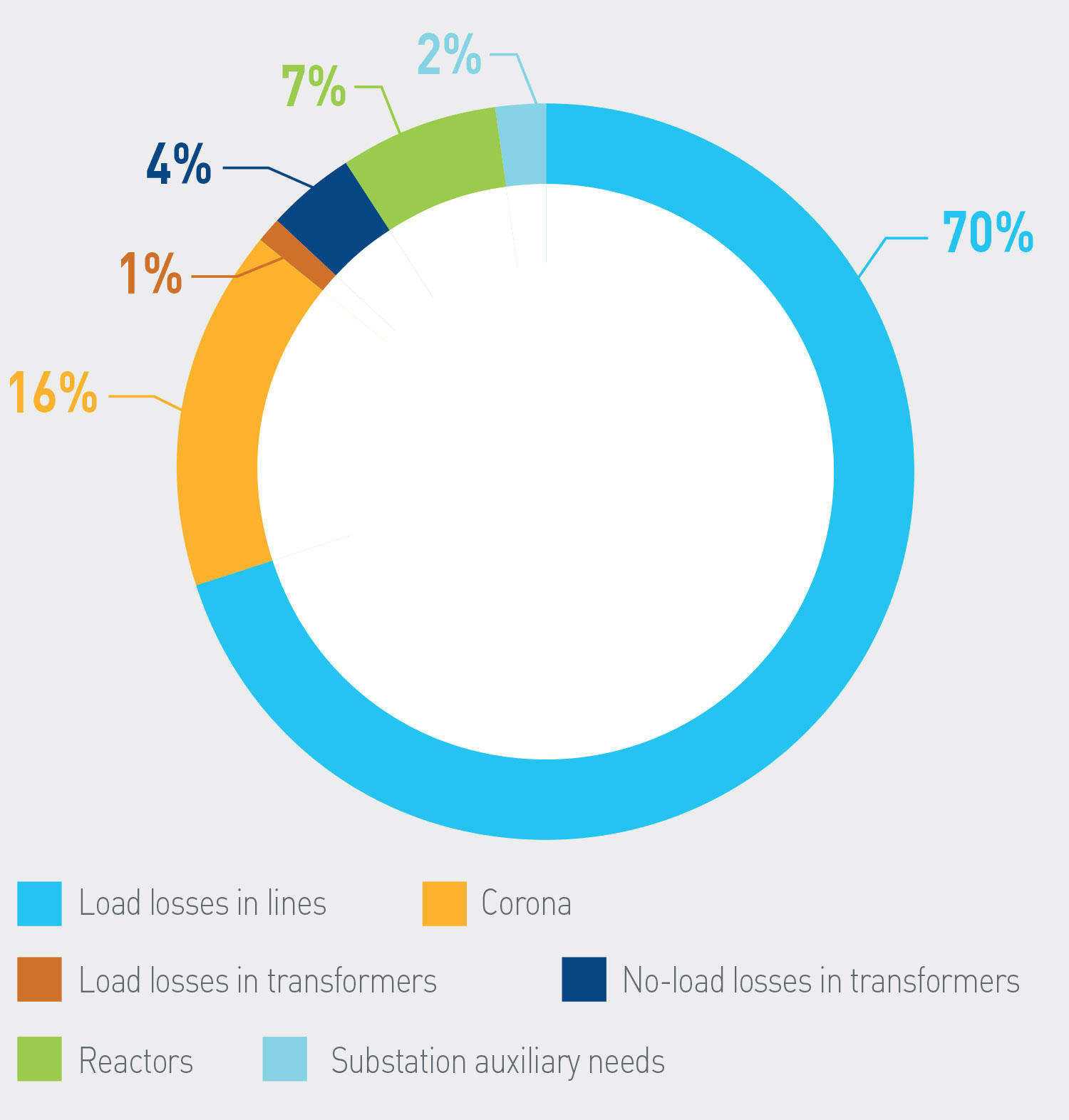
In 2025, the technological electricity consumption in KEGOC JSC networks amounted to 3.115 billion kWh·h, which is equivalent to 4.8 % of the total electricity transmitted to the grid.
Technological electricity consumption in the networks
| 2022 | 2023 | 2024 | 2025 | |
|---|---|---|---|---|
| Electricity losses, % of total electricity supplied to the grid | 4.9 | 5.0 | 5.0 | 4.8 |
Electricity losses in the National Power Grid are calculated using the energy balance method as the difference between the volume of electricity supplied to the grid and the volume of electricity released from the grid during the reporting period.
The calculation is performed at the level of the National Power Grid as a whole, based on electricity metering data, including data generated using the Automated System for Commercial Accounting of Power Consumption.
Given the Company’s status as the NPG operator, the indicator reflects technological losses caused by the physical processes of electricity transmission. The calculation methodology is applied consistently, ensuring data comparability over time and the accuracy of trend analysis.
Technological electricity consumption represents objective losses arising during electricity transmission through the National Power Grid due to physical processes in transmission lines and electrical equipment.
Management of technological electricity consumption is one of the priority areas for improving the Company’s operational efficiency. The main objective is to maintain actual loss levels at an economically and technically optimal level through the planning and consistent implementation of a set of technical and organizational measures. To reduce technological electricity consumption, the Company implements the following measures:
Technical measures:
- modernization of overhead transmission lines and substation equipment;
- replacement of transformers with more energy-efficient models;
- digitalization of National Power Grid facilities and implementation of Smart Grid elements;
- disconnecting network equipment during low-load periods.
Load management measures:
- regulation and reduction of reactive power flows;
- optimization of power flow distribution schemes;
- optimization of steady-state power system modes by voltage levels and reactive power;
- ensuring optimal voltage levels at network nodes.
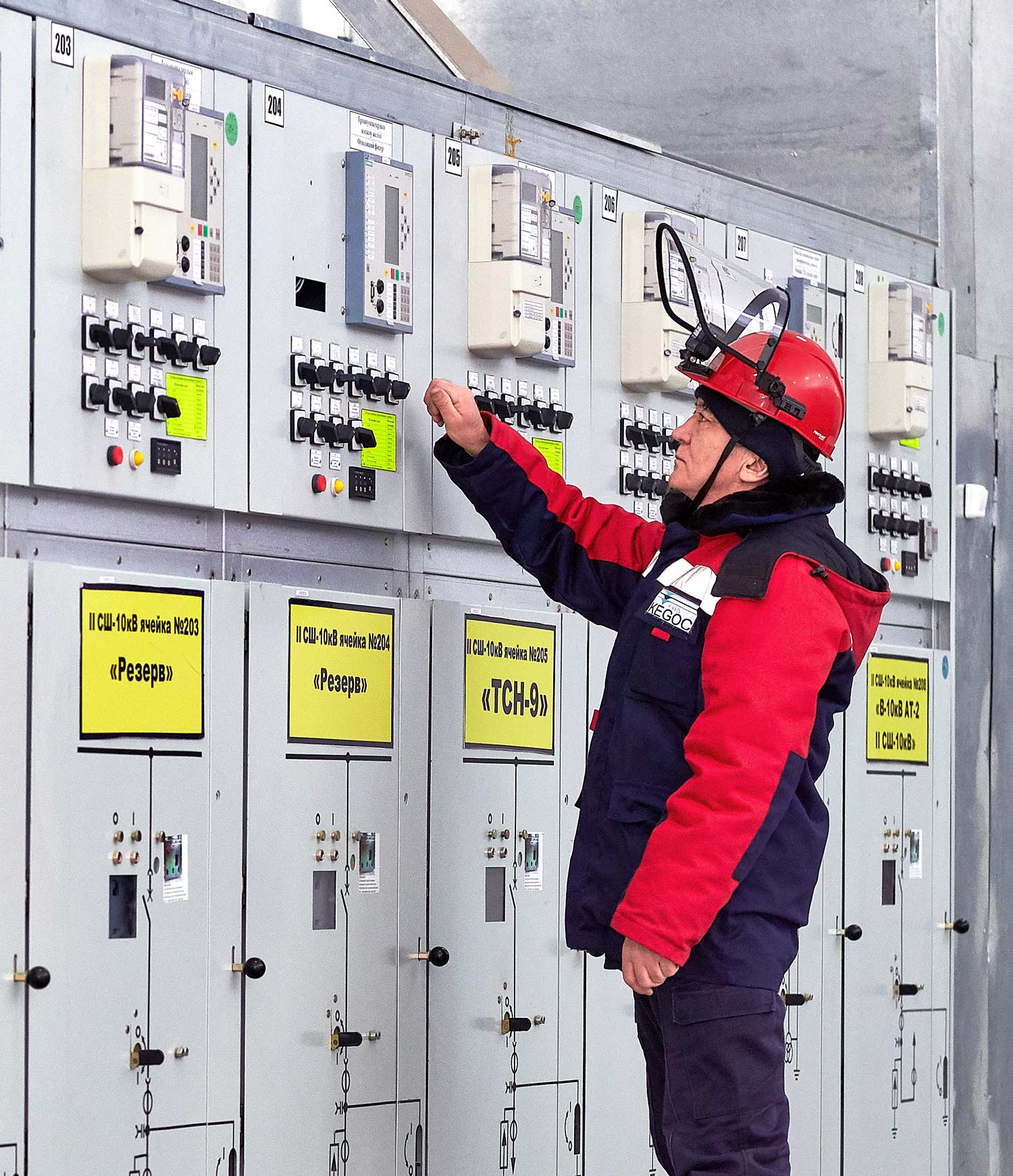
As a result of measures to optimize the operating modes of the UPS of the Republic of Kazakhstan, electricity consumption was reduced by 3.309 million kWh in 2025.
GRI 201-2, GRI 302-4, GRI 302-5
Effect of measures to reduce electricity losses
| Activity | 2023 | 2024 | 2025 | |||
|---|---|---|---|---|---|---|
| mln kWh·h | GJ | mln kWh·h | GJ | mln kWh·h | GJ | |
| Disconnecting lines in low-load mode | 0.180 | 648 | 0.178 | 641 | 0.309 | 1,112 |
| Switching off power transformers in low-load mode | 3.878 | 13,961 | 4.864 | 17,510 | 3.0 | 10,800 |
| Total KEGOC | 4.058 | 14,609 | 5.042 | 18,151 | 3.309 | 11,912 |
The Company has established medium-term key performance indicators for the level of technological electricity consumption. Target values are set for a multi-year period, taking into account the NPG development parameters and the investment programme.
This indicator is included in the KPI system of managing directors and is taken into account when assessing their performance, ensuring manageability and personal responsibility for achieving the established targets.
In accordance with the Law of the Republic of Kazakhstan “On Energy Saving and Energy Efficiency Improvement”, KEGOC JSC initiated an energy audit involving an external specialized organization. Based on the audit results, the Energy Saving and Energy Efficiency Improvement Action Plan for 2021–2025 was approved. As a result of its implementation, 4,680.88 tonnes of oil equivalent (toe) were saved. The following energy efficiency measures were implemented under the Plan:
- Modernization of lighting systems at substations and inside buildings;
- Installation of energy-efficient electric boilers;
- Cleaning of heating system pipelines and water treatment systems;
- Replacement of outdated exterior doors, gates, and window units;
- Installation of radiator thermostats and temperature controllers at facilities with electric heating.
As a result of the measures implemented under the Plan, energy savings in 2025 amounted to 43,362.35 GJ, corresponding to a reduction in greenhouse gas emissions of 8,980.43 tonnes of CO₂-eq.
GRI 305-5
Effect of energy-saving and energy efficiency improvement measures
| 2021 | 2022 | 2023 | 2024 | 2025 | |
|---|---|---|---|---|---|
| Reduction in energy consumption, GJ | 3,165.61 | 11,621.27 | 35,470.78 | 43,541.85 | 43,362.35 |
In 2025, an energy audit was conducted, following which the Energy Saving and Energy Efficiency Improvement Action Plan for 2026–2031 was approved, providing for the potential reduction of energy resource consumption by 1,812.732 tonnes of oil equivalent (toe).
Impact on Biodiversity
GRI 3-3, GRI 2-26, GRI 304-1, GRI 304-2
As a power grid company and system operator, KEGOC JSC does not have a significant impact on flora and fauna. Nevertheless, the Company places great importance on minimizing potential impacts on ecosystems and biodiversity. KEGOC JSC develops the National Power Grid in compliance with the environmental legislation of the Republic of Kazakhstan, as well as international environmental and biodiversity standards applied in projects involving international financial institutions. In this regard, the Company has developed and implemented a Biodiversity Policy, which applies to all KEGOC JSC employees, as well as to suppliers, contractors, and service providers operating at the Company’s facilities in accordance with the terms of concluded contracts. The main objective of KEGOC JSC’s Biodiversity Policy is to prevent and minimize adverse impacts of the Company’s operations on ecosystems and biodiversity within KEGOC JSC’s areas of influence.
KEGOC JSC adheres to the principles of sustainable development, avoiding placement of facilities within protected natural areas. Modern technical solutions are used during the design of new facilities to minimize environmental impact.
When implementing projects for the expansion and modernization of power grid infrastructure, the Company takes into account the natural features of construction regions and applies a comprehensive approach to nature conservation and biodiversity protection, including:
- environmental risk assessments at all stages of the project life cycle, including planning, construction, and post-project monitoring stages; To analyse project implementation risks, PESTEL analysis is used, including social and environmental risk analysis. The results of the EIA conducted, including for biodiversity, are taken into account, and the option that causes the least harm to the environment is adopted. Where significant impacts are identified, biodiversity management plans are developed.
- avoidance of OHTL routes and SS locations in residential areas, zones of prospective development, specially protected natural territories, cultural heritage sites, forests, water protection zones, and other sensitive areas, as well as prevention of deforestation and conversion of natural habitats when selecting routes. Priority is given to design solutions that route lines around forest areas and other ecologically sensitive zones, with subsequent restoration of disturbed land after completion of construction and installation works.
Environmental and social protection programmes and monitoring plans have been developed, including an Environmental and Social Management Plan (ESMP), an Environmental and Social Action Plan (ESAP), a Livelihood Restoration Plan (LRP), and a Grievance Redress Mechanism (GRM).
Typically, OHTL routes are designed to pass through steppe and semi-desert zones, which helps reduce impacts on biodiversity and minimize socio-environmental conflicts.
KEGOC JSC carries out its activities in accordance with the principles of environmental legislation of the Republic of Kazakhstan, in particular the principle of accessibility of environmental information and the principle of public participation. The Company informs stakeholders, including local communities, through public hearings or discussions of EIA projects about the possible consequences of major projects, engages with NGOs on nature conservation initiatives, and conducts training and awareness-raising activities to enhance environmental awareness among employees and partners.
During the EIA, all processes of possible significant environmental impacts in the implementation of the planned activities are taken into account, including:
- effect on atmospheric air,
- reservoirs and groundwater,
- terrain,
- conservation of biodiversity, wildlife.
Impact and Measures for the Protection of Ornithofauna
KEGOC JSC contributes to the preservation of ecosystems and traditional habitats within transmission line rights-of-way and sanitary protection zones around substations.
According to international research, low-voltage power lines of 0.4–10 kV pose a high risk of bird electrocution. This is due to short distances between grounded and energized components, which may cause a short circuit in the event of simultaneous contact.
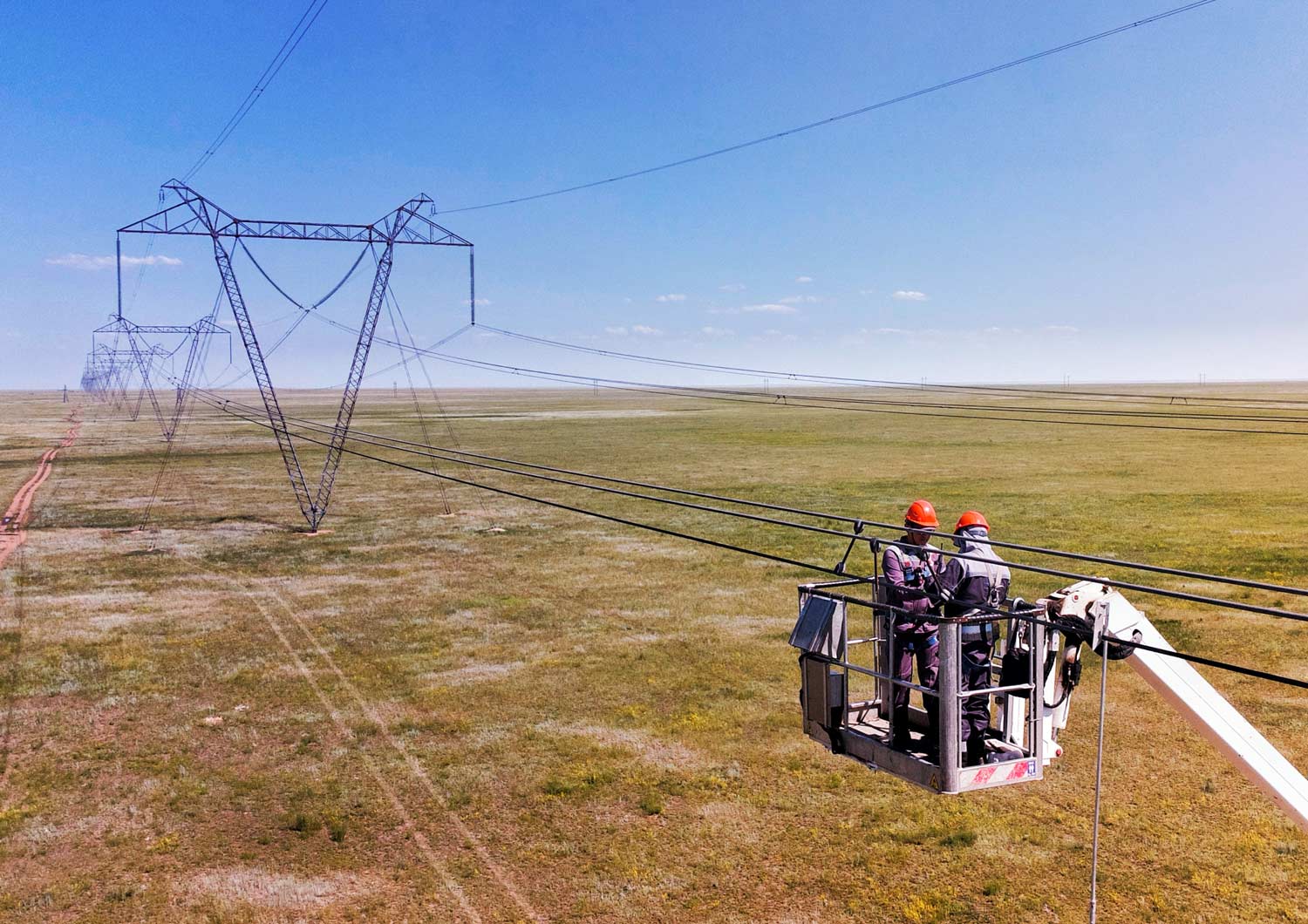
At the same time, 99.2 % of KEGOC JSC overhead transmission lines are high-voltage lines of 110 kV and above, where the minimum distance between grounded and energized parts is at least 1.5 meters. This exceeds the average wingspan of most bird species and therefore virtually eliminates the risk of electrocution.
To mitigate risks to birds from transmission lines, the Company implements the following measures based on international research and its own operational experience:
- Installation of bird protection devices: more than 12 thousand bird-safe devices have been installed at potential bird perching sites on crossarms and outdoor switchgear portals at KEGOC JSC facilities. These devices prevent birds from landing on transmission line and substation elements. Additional devices also include solutions introduced through employee rationalization proposals at branches, such as rotating attachments that activate when birds attempt to perch on the edges of reinforced concrete pole crossarms. Noise and visual deterrents activated by wind are also used to reduce risks to birds and scare them away during periods of high activity, such as seasonal migration.
- Collaboration with ornithologists. the Company continuously studies the market for biodiversity conservation solutions, reviews the practices of peer companies, and maintains communication with environmental organizations. In 2025, KEGOC JSC signed a Memorandum of Understanding with Masdar, a leading international renewable energy company, and the Mohamed bin Zayed Raptor Conservation Fund (MBZRCF).
These additional measures can enhance bird safety by reducing exposure to potential threats and contribute to a more harmonious coexistence between infrastructure and biodiversity.